Louisiana Medical Laboratory Scientist Licensing Guide
License Snapshot
Board Processing Time
4-8 weeks
Board turnaround on a complete application — see lead time below
Application Fee
$65
Renewal: $65
Credential
ASCP
Required national certification
CE Required
12 hours
State Overview
Louisiana licenses laboratory science as more than a single credential. Alongside the general clinical laboratory scientist license, it recognizes 3 separate specialty licenses (Clinical Laboratory Scientist-Specialist (CLS-S), Cytotechnologist, and Phlebotomist (state certification)), plus 3 limited and technician-level credentials (Clinical Laboratory Scientist-Technician (CLS-T), Laboratory Assistant (LA), and Trainee License (license in training)).
In laboratory science the state license is the primary credential, and a national certification such as ASCP is a common qualifying route rather than a separate ongoing requirement. A license you hold in another state does not transfer automatically, so you apply directly to Louisiana's licensing program for each assignment.
General Requirements
If you work in a clinical laboratory in Louisiana, the baseline below applies regardless of where you trained or which specialty you test in.
- State license required: Louisiana requires a state clinical laboratory personnel license to test patient specimens. This is the primary credential, separate from your employer's onboarding or the lab's CLIA certificate.
- Qualifying certification: a national certification such as ASCP (or another board the state approves, e.g. AMT) is the usual route to eligibility. Confirm which certifying bodies Louisiana accepts before you apply.
- Credential required: Baccalaureate degree plus completion of an approved nationally recognized generalist certification examination (e.g., ASCP, AMT, AAB), or a pre-1995 HEW certification.
- Scope of the general license: Performs clinical laboratory tests and procedures in ALL specialty areas requiring independent judgment and responsibility, including all CLIA-defined testing. May perform the functions of every other licensed/certified category EXCEPT the cytotechnologist, without additional licensure.
- Verification: ASCP or direct board verification.
Fees & Credentials
Louisiana issues more than one laboratory credential, so fees vary by the license you hold. The table below is one row per state-recognized credential.
| Credential | Application | Renewal | Cycle |
|---|---|---|---|
| Clinical Laboratory Scientist-Generalist (CLS-G) | $65 | $65 | Every 1 year |
| Clinical Laboratory Scientist-Specialist (CLS-S) | $65 | $65 | Every 1 year |
| Clinical Laboratory Scientist-Technician (CLS-T) | $65 | $65 | Every 1 year |
| Cytotechnologist | $65 | $65 | Every 1 year |
| Laboratory Assistant (LA) | $40 | $40 | Every 1 year |
| Phlebotomist (state certification) | $40 | $40 | Every 1 year |
| Trainee License (license in training) | $65 | $65 | Every 1 year |
Renewal & Continuing Education
- Continuing education: Louisiana requires 12 hours per cycle for license renewal.
Getting Licensed
Laboratory licensure runs through the state program, with your national certification establishing eligibility. For most candidates the steps are:
- Hold a qualifying certification or education for the license you want (a generalist ASCP certification for the general license; the matching category certification for a specialty license).
- Arrange for official transcripts and certification verification to be sent directly from your school and certifying body (ASCP/AMT). Most state labs require these direct from the source, not submitted by you.
- Apply to Louisiana State Board of Medical Examiners through the application portal.
- Have your certifying body and prior states verify directly to the program. You do not self-attest the certification.
Common slip-ups travelers hit here: verification letter from current state lists inactive or lapsed license status; applicants must confirm active license before requesting verification from board.
Processing & Timing
Plan for roughly 4-8 weeks for a clean application. Treat that as a planning number rather than a board-published guarantee.
Two things stretch the timeline for laboratory licensure. The state has to receive certification verification from your certifying body and license verification from every state where you have held a license, and those hand-offs have their own latency. If you are applying for more than one credential, for example a generalist license plus a specialty license, they may process as separate items rather than in one pass.
High risk of missed start dates if application submitted less than 8 weeks prior. No temporary license safety net means permanent license must be fully issued before day 1. Sequential processing and out-of-state verification delays are the primary risk drivers.
Specialty Differences
Most of the laboratory family in Louisiana runs on the general license. A handful of credentials genuinely diverge, and those are the ones worth reading closely. Below is one subsection per real difference, then roll-up lines for everything else.
Clinical Laboratory Scientist-Specialist (CLS-S)
Divergence: separate license. Practices clinical laboratory science in ONE OR MORE named laboratory specialties only. 'Laboratory Specialty' is statutorily defined as any category/subcategory recognized by a certifying agency, including hematology, microbiology, chemistry, and blood bank (immunohematology) and their subcategories. May perform laboratory assistant and phlebotomist functions without additional licensure.
- Fee: $65 application, $65 renewal, every 1 year
- Credential: Doctoral, master's, or baccalaureate degree with a major in a chemical, physical, or biological science, plus a nationally recognized certification examination IN A LABORATORY SPECIALTY approved by the board (e.g., ASM for microbiology, AACC for chemistry, AABB for blood bank, ABI for immunology)
How it differs from the general license: A discipline-restricted full license rather than the all-areas generalist. The CLS-S is credentialed to and may practice only within the specialty (or specialties) for which they hold an approved specialty certification (hematology, microbiology, chemistry, blood bank/immunohematology, etc.), and cannot work all specialty areas the way a CLS-G can. It is its own separately issued license category, not a sub-tier of the generalist.
Clinical Laboratory Scientist-Technician (CLS-T)
Divergence: limited-scope tier. Performs high- and moderate-complexity tests across any area of clinical laboratory science that do NOT require independent judgment or responsibility; high-complexity testing must be performed under supervision per CLIA. May perform laboratory assistant and phlebotomist functions without additional licensure.
- Fee: $65 application, $65 renewal, every 1 year
- Credential: Completion of an approved nationally recognized technician-level certification examination (e.g., ASCP MLT)
How it differs from the general license: The MLT-level tier below the generalist. Unlike the CLS-G, the technician cannot exercise independent judgment/responsibility and must perform high-complexity testing under supervision. Lower education and certification bar (technician exam vs. generalist exam). The board frames it as a separate licensure category but it is functionally a reduced-scope tier under the generalist.
Cytotechnologist
Divergence: separate license. Practice of clinical cytotechnology requiring independent judgment and responsibility: microscopic study/examination of body fluids, tissues, or desquamated cells (e.g., detecting malignancy, microbiologic changes, hormonal levels).
- Fee: $65 application, $65 renewal, every 1 year
- Credential: Baccalaureate degree, completion of the educational requirements to enroll in a school of cytotechnology, one full year of full-time cytotechnology experience in an approved school, and an approved nationally recognized cytotechnology certification examination (e.g., ASCP, ASCT)
How it differs from the general license: The single specialty the generalist license CANNOT cover. A CLS-G may perform every other category's functions except cytotechnology, so cytotechnologists need their own distinct license with cytotechnology-specific education, experience, and certification.
Laboratory Assistant (LA)
Divergence: limited-scope tier. Performs laboratory tests and procedures UNDER SUPERVISION by a licensed health care provider or laboratory director; no independent judgment or responsibility in any area. May perform high-complexity tests only under supervision per CLIA.
- Fee: $40 application, $40 renewal, every 1 year
- Credential: High school diploma or equivalent plus documented training/competency in basic laboratory science (the only category not requiring a certification exam, though passing an ISCLT or ASCP laboratory-assistant exam is deemed conclusive evidence of competency)
How it differs from the general license: The lowest licensed bench tier, below the technician. No degree or certification exam required (competency documentation only), all work is supervised, and it carries no independent judgment authority. Far narrower than the generalist's all-areas independent practice.
Phlebotomist (state certification)
Divergence: separate license. Performs invasive procedures to withdraw blood samples for clinical laboratory science (analysis, typing, crossmatching for transfusion); may perform and report results of waived tests only.
- Fee: $40 application, $40 renewal, every 1 year
- Credential: Completion of a board-approved phlebotomy training program (minimum 20 lecture hours or equivalent practical hours) and a certification examination approved or administered by the board/committee, or an approved national phlebotomy certification (e.g., ASPT, NPA, AABB, IAPS)
How it differs from the general license: Issued as a state CERTIFICATE rather than a CLS license, and limited to specimen collection plus waived testing. Important exemption: under R.S. 37:1313.D, individuals performing phlebotomy under the direction/supervision of a physician, hospital, clinic, nursing home, or other licensed health-care facility are EXEMPT from certification, so many hospital phlebotomists work uncertified. CLS-G, CLS-S, and CLS-T may all perform phlebotomy without this separate certificate.
Trainee License (license in training)
Divergence: limited-scope tier. Permits practice of clinical laboratory science in the corresponding category ONLY under the direct supervision of a CLS-G, CLS-S, or cytotechnologist. Not required for trainees practicing exclusively through an approved school/training program.
- Fee: $65 application, $65 renewal, every 1 year
- Credential: Issued to an individual who has not yet fulfilled the educational requirements to sit for an approved certification exam, or who needs supervised full-time comprehensive experience. Also issued to returning practitioners certified but out of practice 10+ years
How it differs from the general license: A temporary, supervision-only credential for those not yet eligible for full licensure (or returning after a long absence). Carries no independent practice authority and is tied to a specific licensure category; the holder must work under a fully licensed CLS-G, CLS-S, or cytotechnologist.
Official Resources
Louisiana State Board of Medical Examiners
Board Website·Application Portal·License Verification
Phone: (504) 568-6820
Email: [email protected]
Frequently Asked Questions
Last verified: April 15, 2026. Please note that while Fusion Medical Staffing strives to provide the most current and accurate information, we cannot guarantee the completeness or timeliness of the information provided. Requirements and processes can change frequently. Healthcare professionals are strongly encouraged to verify details directly with Louisiana State Board of Medical Examiners's official website.
Resources

JAN 5, 2023
The Positive Demand For Medical Laboratory Techs
Medical laboratory professionals are at the forefront of clinical decision-making. Because lab results are so vital in providing data and information
AUG 5, 2021
MLS vs MLT: What’s the Difference?
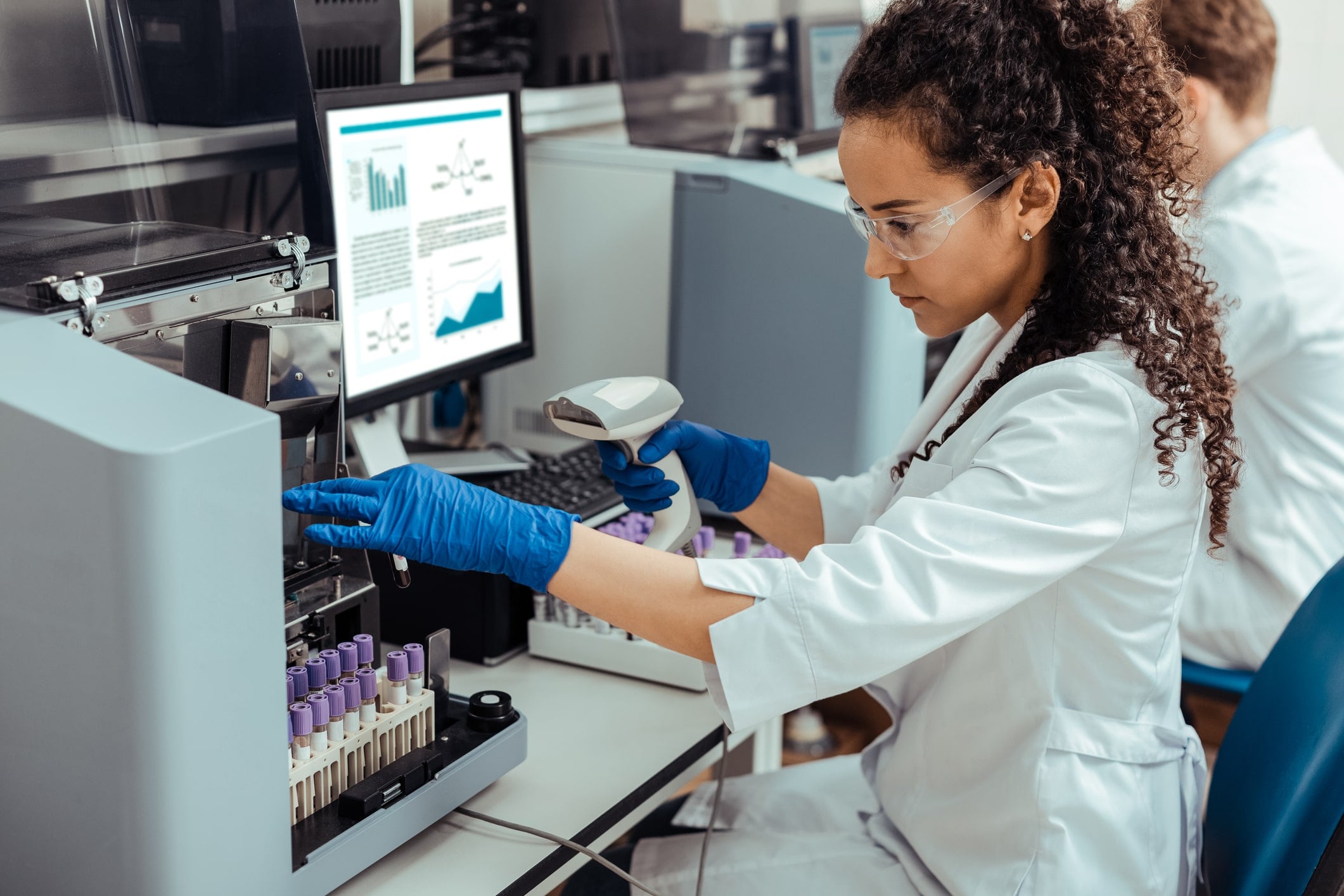
Have you ever wondered what happens once you provide a specimen sample at the doctor? Or thought about who does all those laboratory tests or even who
OCT 14, 2024
Division Deep Dive: Q&A with Travel Medical Lab Recruiters
You need a trusted recruiter partner by your side as a traveling medical lab professional. Spoiler alert: trusted recruiter partners are the only kind
